
Two more days and it’s time to go home. We don’t want to go home. None of us do. Even with this new addition to our family we fit nicely into this hotel room and figured we could just stay here for the rest of our lives. No work, only play, exploration and fun. Life should be so simple.
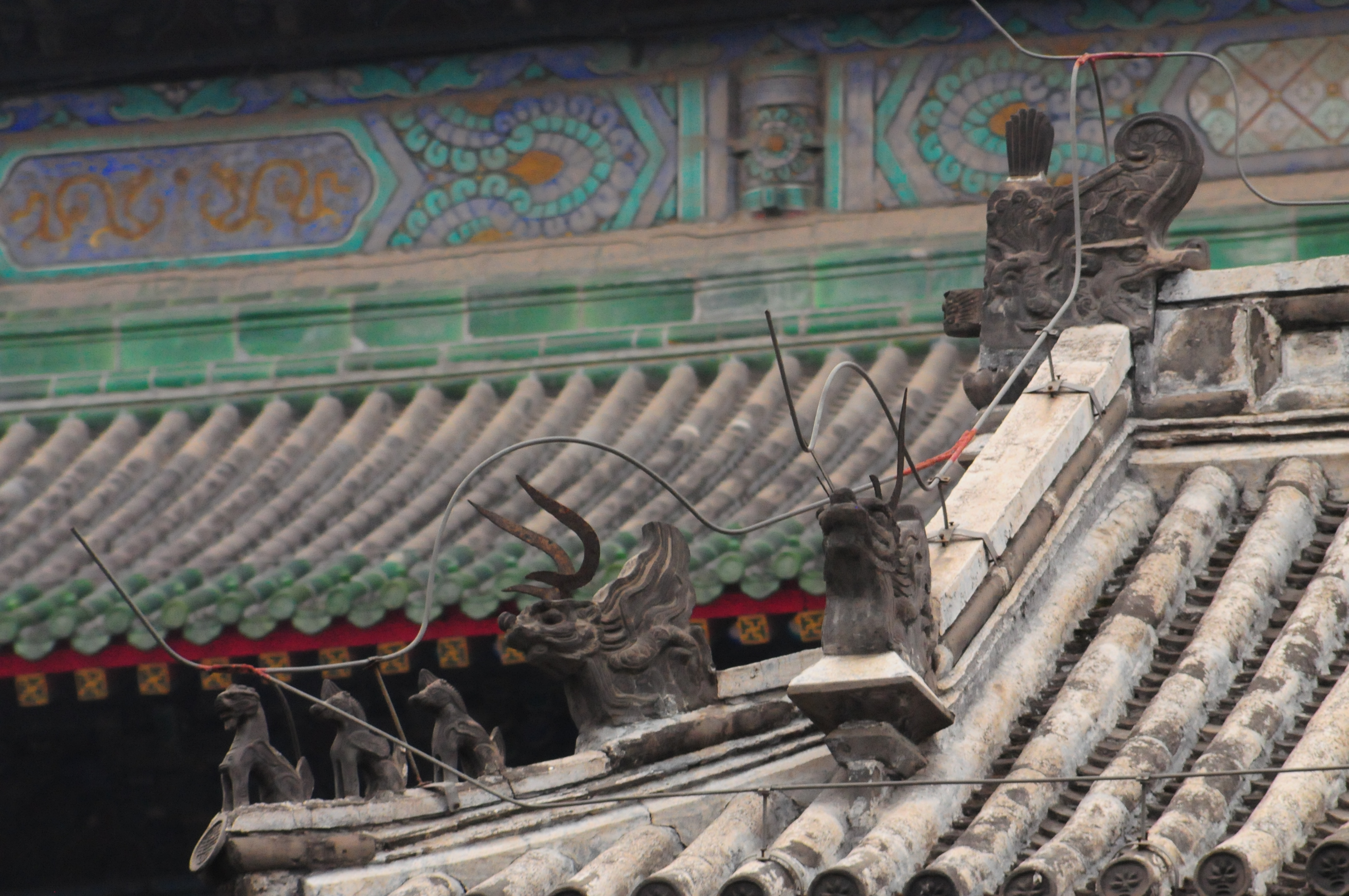 We’re running out of time so we’ve tried to get in every inch of sidewalk under our feet before the time comes to say goodbye. We wanted to see the obvious things but also to discover what made Beijing tick. One of the first things you notice when looking at a map of Beijing is that it’s on a grid, and that starting at the old imperial city in the centre, the city branches out in circular roads, or ring roads, that grow larger the farther they get from the city centre. The city’s over 3000 years old so now’s not the time for a detailed history lesson but 2000 years of imperialism left its mark.
The Forbidden City in the centre was home to the nobility, who rarely left it. As the name suggests, the place was off-limits to anyone but royals and eunichs (more on that later).

The Forbidden City consists of outer and inner courtyards in which a large number of very oversized buildings are situated, painted red with gold roofs (appropriate for the nobility), and separated by a multitude of courtyards so large that one imagines how long it must have taken anyone to get anywhere.
There are buildings built just so that people could rest between houses. Imagine how painful it must have been for the concubines with their mangled feet to get anywhere! But then, they were all carried by slaves (the eunichs again) in the sedan-chairs. Makes me wonder if the resting stations weren’t for the slaves since the feet of the emperors never touched the ground. Just like in the movies!. But I digress.
The nobility lived to the east and west of the imperial palace, and farther away to the north and south were the common folk. The aristocrats lived in large houses within walled courtyards, called siheyuans, and between these lavish residences were laneways, called hutongs, which were also lined with much smaller houses and businesses, to serve the nobility whose houses they surrounded.  Mid-20th century China’s urge toward modernity saw many of the hutongs demolished to make way for wider roads and office towers. Since then, the trend has been to preserve these architectural gems, where people still live and shop. Many government apparatchiks still live in the private court-yarded residences, as evidenced by the convoys of Audi A8s that still tear down these narrow, busy lanes. And tear they do! Like everywhere else in Beijing, don’t be standing in the laneway taking pictures or they’ll run you down avec stroller.
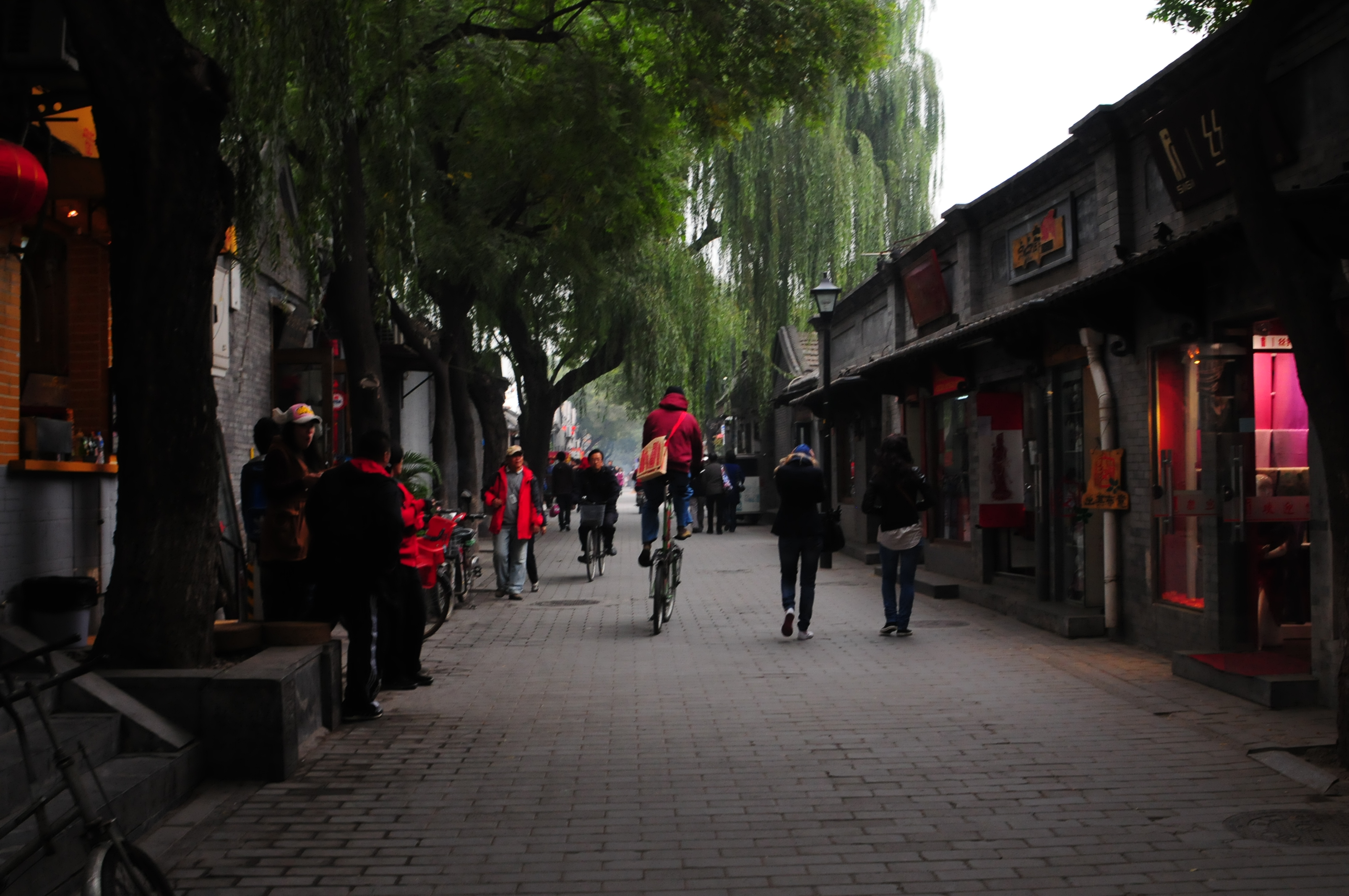 These don’t look like little European village roads. They more resemble the back lanes of big North American cities, but narrower and without the garage doors, graffiti and dodgy characters. The architecture is beautiful and complex, built during the 1400s and detailed with exquisite stone carvings and decorations that represented the social status of the individuals for whom they were built.
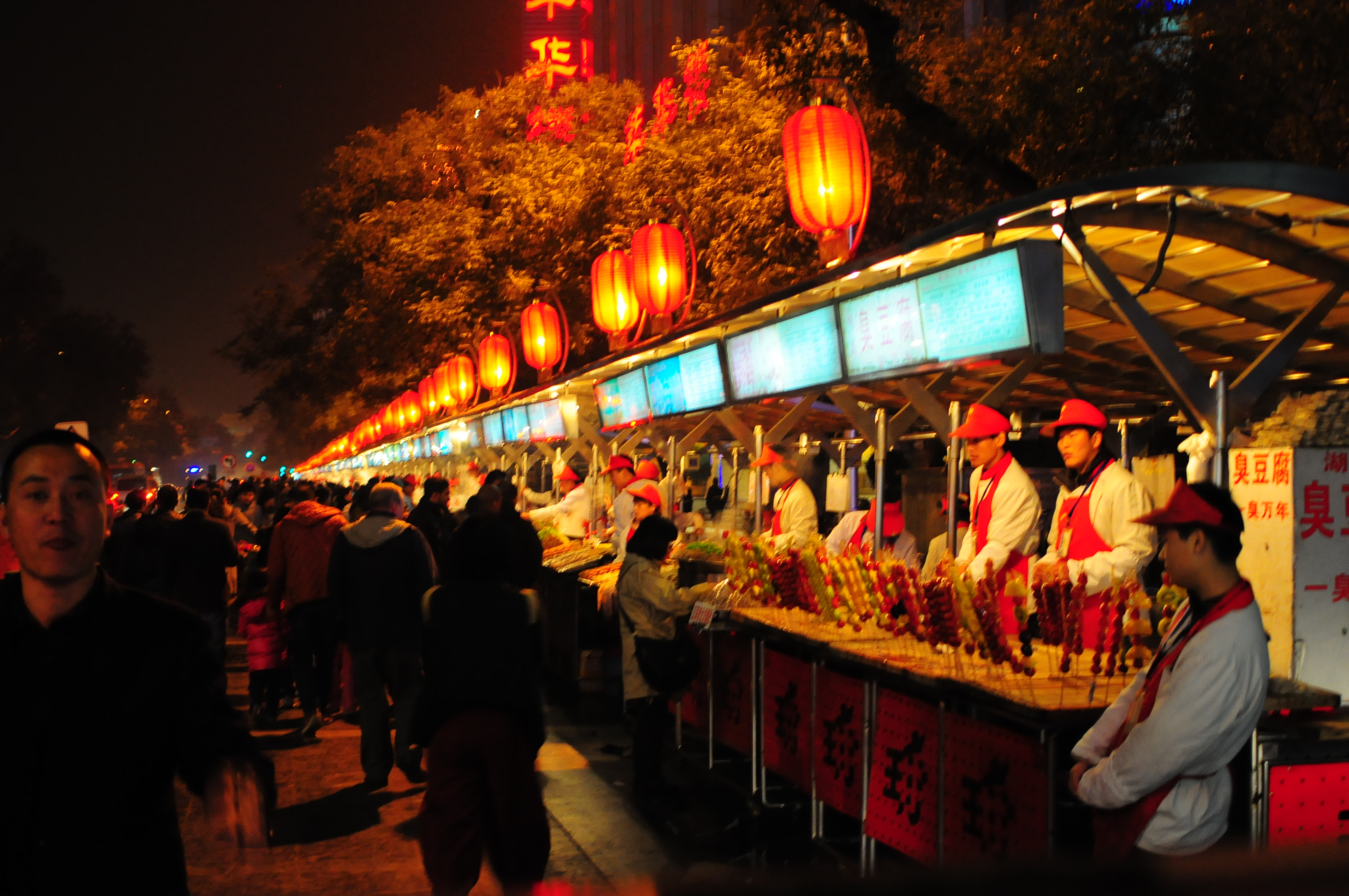 Nowadays, some of the hutongs have loose themes (the bar/restaurant hutong, the local market hutongs, the meat-on-a-skewer hutong where you can get chicken-pork-lamb-beef-river eel-snake-scorpion-dog-centipede-cicada larva-octopus-seahorse). No, that was not a typo. Many hutongs are still predominantly residential. To wit, one of the first hutongs T and Kman encountered with little DD in the stroller looked to get narrower around the next turn and it was getting dark and being in a strange city with two children in tow, T wasn’t sure if they shouldn’t just turn around. He asked the old lady who was hanging her laundry on the playground equipment if it was safe to continue and she nodded enthusiastically before launching into a physical demonstration of how to use the equipment. It’s not really playground equipment but rather permanent outdoor exercise equipment, paid for by the government to keep people fit. (We saw a beautiful demonstration in a Guangzhou park). If you’re a Torontonian there are some of the same pieces installed on the east side of Chinatown on Cecil Street, usually in use by the local Chinese grannies and grandpas. Anyway, back to the story. The
 old lady gave our son a demonstration on how to use the equipment, cheerfully explaining in Mandarin with nods and smiles. But, y’know, it’s one of those universal things – the ability of grannies to interact with little children. In spite of recent, tragic events that I’m sure have tainted people’s opinions, the Chinese love children and take every opportunity to hug, pinch, tug at and adjust our kids at every opportunity. I’m sure they need it too because who are we to question the urges of Chinese grannies (they deserve their own blog, I’m sure)?
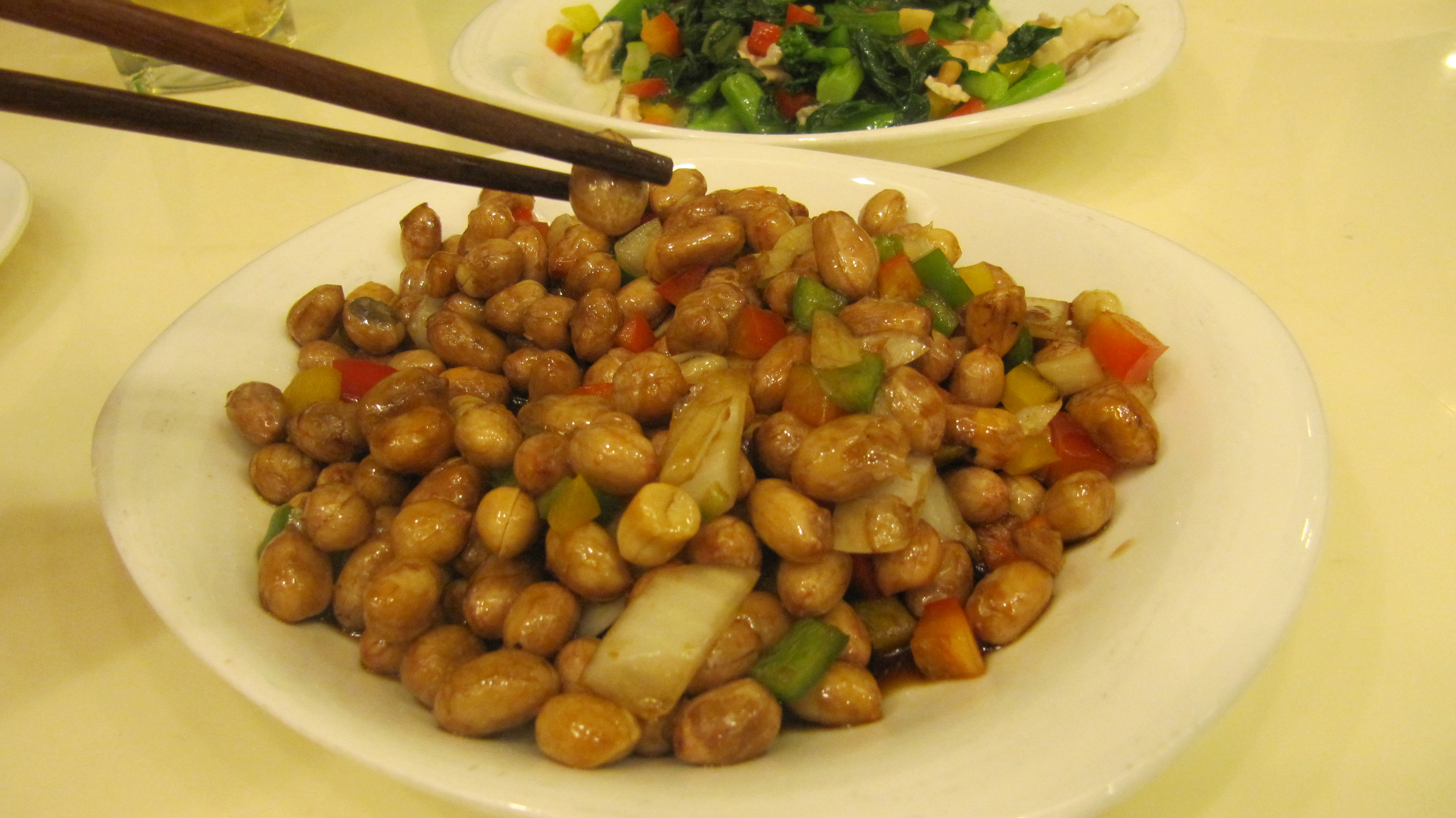 After miles of walking the hutongs today, we went out to our new favourite (but never to be seen again) restaurant and ordered the same dishes we had the other night, plus blanched peanuts with diced onion, a medley of peppers in a soy/sesame sauce, with an unidentifiable mildly-sweet flavour that made the dish yummy for our tummies. Our DD ate white rice, egg and tofu, which will, we’re sure, contribute to a solid bowel movement. Sorry about that, but we’re bound and determined to wean this late-bloomer off of her all-liquid diet into something recognizable.
On our walk today we ran into a section of the hutong that is part of a civic beautification and while we were trying to enjoy the lovely scenery, we realized we had to mix a bottle. Out comes the thermos filled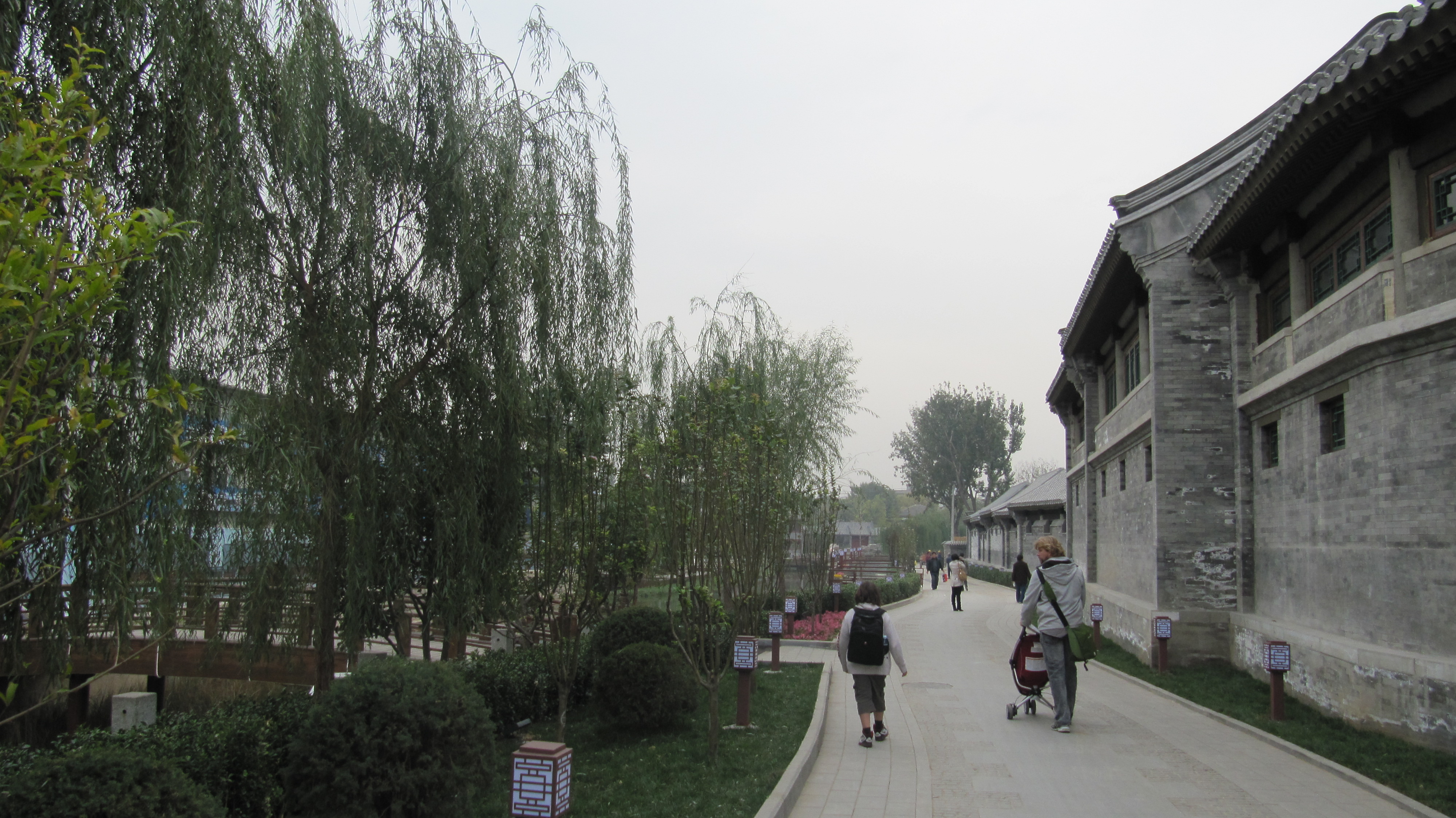 with hot water, the mixed powder of baby formula and rice cereal, which we tried in vain to dissolve in the water (this stuff is like quick-dry cement with a vanilla scent – totally gross, if I may say so). Of course, child is threatening a meltdown which is never good in public. How does it look to the locals? A western couple who have just abducted a Chinese child are trying to feed the poor creature quick-dry cement from a baby bottle! They cluck, smile, nod, pull her sweater up because she’s obviously under dressed and then stand there and watch us while we go through our little production. We pass muster and are allowed to continue. We know this because the local police officer not only let us pass by but helped us with directions.
We will miss these people and we will miss this place.
 Oh, right, the eunichs. They had to be eunichs to ensure the pure lineage of the emperor’s offspring within the confines of the imperial city (I guess the pool guy couldn’t be trusted). They were finally banished from the imperial court in 1917 at the dissolution of imperialism, when the Qing Dynasty collapsed. Poor creatures were sent from the palace gates with their bits still sitting in bags attached to their belts, in the hopes that they would be buried ‘whole’.
Please check www.flickr.com/budbug for more photos, and thanks for following us!
You must be logged in to post a comment.